Skip to content
Compare

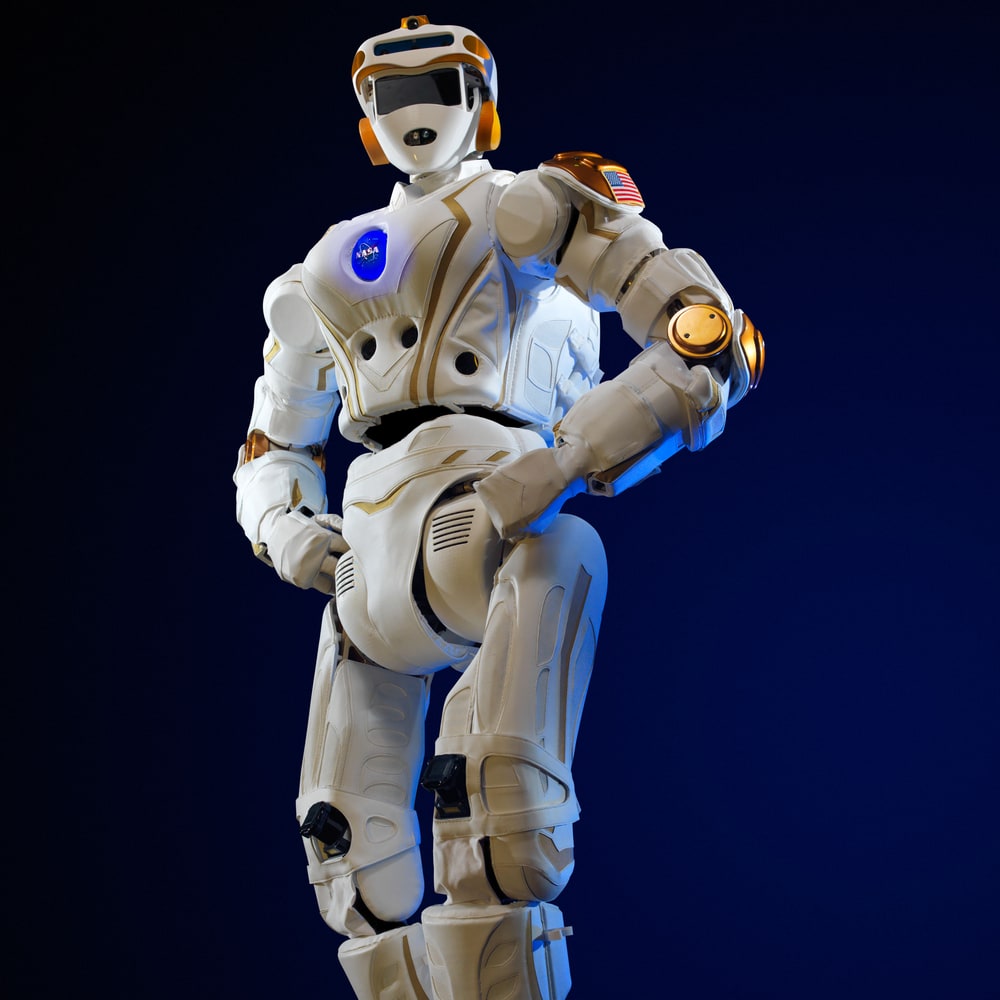
NASA Valkyrie

The NASA Valkyrie is a 1.88 m, 136.078 kg full-size humanoid from NASA Johnson Space Center (Houston, US), prototype. Verified 25 Sept 2026.

NASA Valkyrie, picture 1 of 1
Photo: NASA/Bill Stafford, James Blair, Regan Geeseman · Public domain · original · cropped
Would you want this robot?
No votes yet. Be the first.
Reader poll · not a measurement · one vote per browser
Status
Prototype
DOF
44
Sources
1
Claims
13 accepted · 0 in review
Attribute · value
Commercial
Status
prototype
Evidence ▾
Verified · T1⚑ Report
nasa.gov · source ↗
designed and built by the Johnson Space Center (JSC) Engineering Directorate to compete in the 2013 DARPA Robotics Challenge (DRC) Trials
Accessed 25 Sept 2026
Physical
Heightm
1.88 m
Evidence ▾
Verified · T1⚑ Report
nasa.gov · source ↗
Height: 6 feet 2 inches
Accessed 25 Sept 2026
Weightkg
136.078 kg
Evidence ▾
Verified · T1⚑ Report
nasa.gov · source ↗
Weight: 300 pounds
Accessed 25 Sept 2026
Runtimemin · higher is better
60 min
Evidence ▾
Verified · T1⚑ Report
nasa.gov · source ↗
The custom dual-voltage battery is capable of running the robot for about an hour.
Accessed 25 Sept 2026
Battery capacityWh · higher is better
1800 Wh
Evidence ▾
Verified · T1⚑ Report
nasa.gov · source ↗
Battery Energy: 1.8kWh
Accessed 25 Sept 2026
Degrees of freedom
44
Evidence ▾
Verified · T1⚑ Report
nasa.gov · source ↗
Degrees of Freedom: 44
Accessed 25 Sept 2026
Hand type
simplified humanoid hand, 3 fingers and a thumb
Evidence ▾
Verified · T1⚑ Report
nasa.gov · source ↗
Valkyrie features a simplified humanoid hand, with 3 fingers and a thumb.
Accessed 25 Sept 2026
Technical
Sensors
Carnegie Robotics Multisense SL (laser, passive stereo, IR structured light) · fore and aft hazard cameras in torso · two IMUs in pelvis
Evidence ▾
Verified · T1⚑ Report
nasa.gov · source ↗
The main perceptual sensor is the Carnegie Robotics Multisense SL, with modifications to allow for IR structured light point cloud generation in addition to the laser and passive stereo methods already implemented.
Accessed 25 Sept 2026
Lidar
Yes
Evidence ▾
Verified · T1⚑ Report
nasa.gov · source ↗
The main perceptual sensor is the Carnegie Robotics Multisense SL, with modifications to allow for IR structured light point cloud generation in addition to the laser and passive stereo methods already implemented.
Accessed 25 Sept 2026
Cameras
Multisense SL stereo head camera · fore hazard camera (torso) · aft hazard camera (torso)
Evidence ▾
Verified · T1⚑ Report
nasa.gov · source ↗
Valkyrie also features fore and aft “hazard cameras” located in the torso.
Accessed 25 Sept 2026
Compute
2 x Intel Core i7
Evidence ▾
Verified · T1⚑ Report
nasa.gov · source ↗
Computers: 2 x Intel Core i7
Accessed 25 Sept 2026
Capability
Use cases
DARPA Robotics Challenge · operating in degraded or damaged human-engineered environments · Space Robotics Challenge research platform
Evidence ▾
Verified · T1⚑ Report
nasa.gov · source ↗
capable of operating in degraded or damaged human-engineered environments
Accessed 25 Sept 2026
Target market
research
Evidence ▾
Verified · T1⚑ Report
nasa.gov · source ↗
in preparation for the Space Robotics Challenge, part of NASA’s Game Changing Development Program and Centennial Challenges.
Accessed 25 Sept 2026
Recent changes · this robotFull changelog →
25 Sept 2026Target marketresearch
25 Sept 2026Use casesDARPA Robotics Challenge · operating in degraded or damaged human-engineered environments · Space Robotics Challenge research platform
25 Sept 2026Hand typesimplified humanoid hand, 3 fingers and a thumb
25 Sept 2026CamerasMultisense SL stereo head camera · fore hazard camera (torso) · aft hazard camera (torso)
25 Sept 2026LidarYes
25 Sept 2026SensorsCarnegie Robotics Multisense SL (laser, passive stereo, IR structured light) · fore and aft hazard cameras in torso · two IMUs in pelvis
25 Sept 2026Degrees of freedom44
25 Sept 2026Compute2 x Intel Core i7
Related · Full-size humanoidCompare with NASA Valkyrie
Not affiliated with NASA Johnson Space Center. JSON: /api/robots/nasa-valkyrie · Data CC BY 4.0 · Report an error